
Risk Management for Crypto Traders: How to Apply Forex Position Sizing to Bitcoin and Altcoin Trades
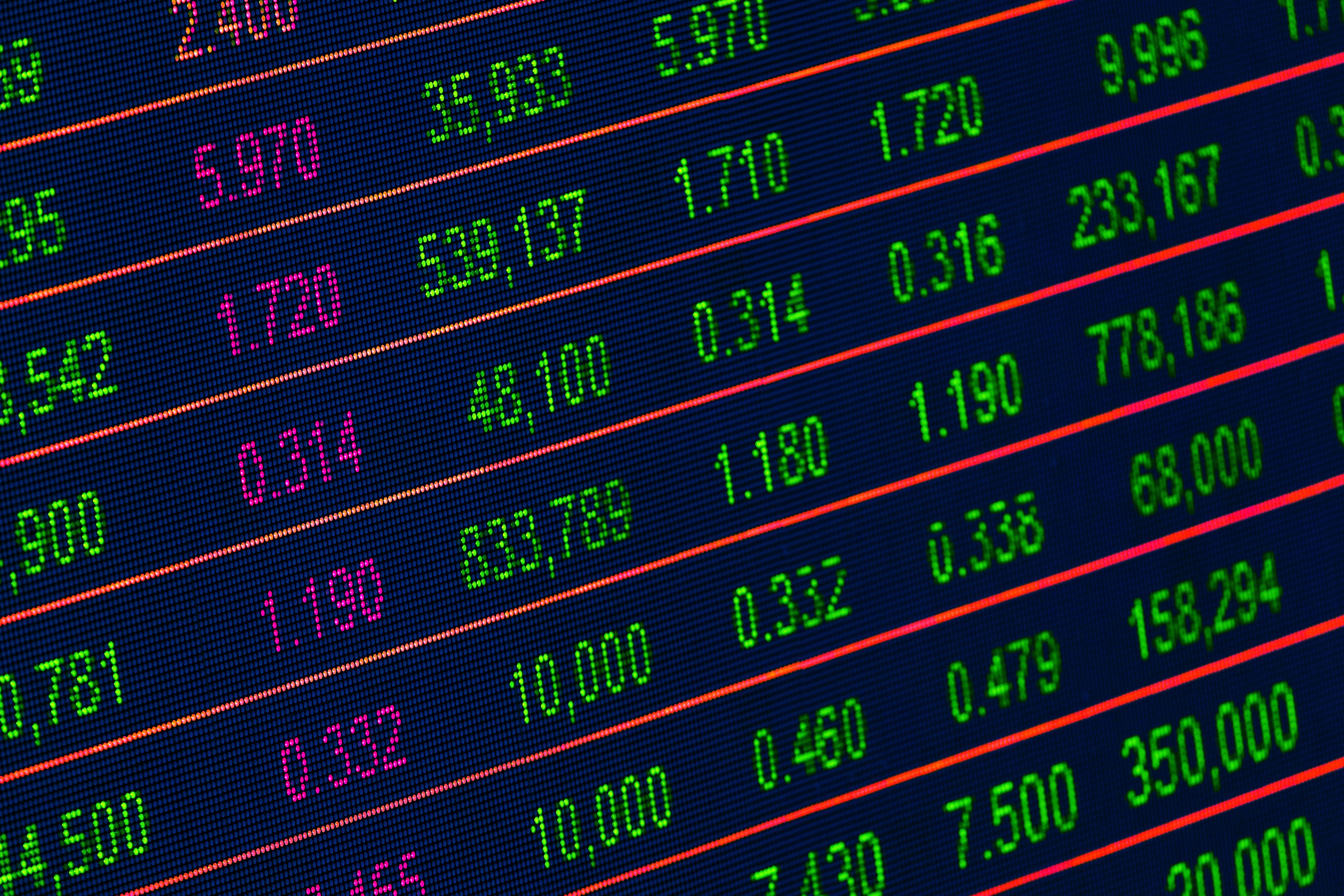

Crypto traders blow up their accounts at a higher rate than forex traders. There are several reasons for this — higher volatility, 24/7 markets with no forced session breaks, easier leverage access on offshore platforms, and the psychological weight of watching a position move 10% against you in an hour. But the most common underlying cause is the same one that destroys forex accounts: no defined position sizing system.
Forex trading, for all its risks, has a well-developed risk management culture built around the percentage-based position sizing model. Crypto trading largely does not. Most retail crypto traders size positions based on round numbers ('I'll put $500 into this'), conviction levels ('this one feels like a 2x'), or whatever their remaining balance allows after previous trades. None of those are risk management.
The good news is that the forex position sizing framework — the one that keeps forex traders alive through drawdown periods — transfers directly to crypto. It requires a few adjustments for how crypto instruments work, but the core logic is identical. This post shows you how to make that translation.
Why Crypto Needs Stricter Sizing Than Forex
Before walking through the mechanics, it is worth being clear about why position sizing is even more important in crypto than in forex.
A major forex pair like EUR/USD typically moves 0.5-1.5% in a normal trading day. Bitcoin can move 5-10% in a normal day. Ethereum frequently moves more. Altcoins can move 20-30% or more on high-volume days. The same percentage risk that produces a $100 loss on a forex trade with a 30-pip stop can produce a $400 loss on a Bitcoin trade because the underlying instrument moved four times as far.
This volatility differential means crypto traders need to size down — often significantly — relative to the same percentage risk they would apply in forex. A 1% account risk on a Bitcoin trade with a $2,000 stop distance requires a much smaller position than 1% risk on a EUR/USD trade with a 30-pip stop. The math forces smaller sizes, which is exactly what the math is supposed to do.
The mindset shift In crypto, the temptation is to size based on how much you want to make, not on how much you are willing to lose. Forex position sizing forces you to start with the loss — how many dollars am I prepared to lose if this trade does not work? — and work backward to the position size. That inversion is the entire discipline. |
The Percentage-Based Model: How It Works in Crypto
The model is identical to forex:
Position Size = (Account Equity × Risk %) ÷ (Stop Distance in $)
In forex, stop distance is measured in pips. In crypto, it is measured directly in dollars (or dollar-equivalent stablecoins), which actually makes the calculation simpler.
Step-by-step example — Bitcoin (BTC/USD)
Account equity: $10,000 | Risk per trade: 1% | Entry price: $65,000 | Stop loss: $63,000 (2,000 points below entry)
• Risk amount in dollars: $10,000 × 1% = $100
• Stop distance: $65,000 − $63,000 = $2,000
• Position size in BTC: $100 ÷ $2,000 = 0.05 BTC
• Dollar value of position: 0.05 × $65,000 = $3,250
If BTC hits your stop at $63,000, you lose: 0.05 × $2,000 = exactly $100. One percent of your account. As designed.
Step-by-step example — Ethereum (ETH/USDT)
Account equity: $10,000 | Risk: 1% | Entry: $3,200 | Stop: $3,050 (150 points below entry)
• Risk amount: $100
• Stop distance: $3,200 − $3,050 = $150
• Position size in ETH: $100 ÷ $150 = 0.667 ETH
• Dollar value: 0.667 × $3,200 = $2,133
Step-by-step example — Altcoin with high volatility (SOL/USDT)
Account equity: $10,000 | Risk: 1% | Entry: $145 | Stop: $132 (13 points, roughly 9% below entry)
• Risk amount: $100
• Stop distance: $145 − $132 = $13
• Position size in SOL: $100 ÷ $13 = 7.69 SOL
• Dollar value: 7.69 × $145 = $1,115
Notice what the model is telling you here: on a volatile altcoin with a wide stop, your 1% risk only justifies $1,115 of capital deployed. Not $5,000. Not your entire altcoin allocation. The model constrains you to a size that reflects the actual risk of the move, not your enthusiasm about the setup.
Adjustments for Crypto-Specific Realities
1. Use a volatility buffer on your stops
Crypto exchanges — particularly on derivatives and perpetual futures — run stop hunts more aggressively than forex markets. Setting a stop exactly at the obvious technical level (the swing low, the support line) frequently results in a precise stop-out before the trade resumes in your intended direction. Add a volatility buffer of 0.5-1% beyond the technical stop level to account for this. This increases your stop distance, which forces a smaller position size, which is the correct response to a higher-risk market structure.
2. Reduce risk percentage for altcoins
The standard forex risk parameter of 1-1.5% per trade is too aggressive for most altcoins, which can gap down 20-30% on adverse news with no warning. For large-cap altcoins (ETH, SOL, the top 10 by market cap), 0.5-1% risk per trade is more appropriate. For mid-cap and small-cap altcoins, 0.25-0.5% per trade is worth considering. The math of crypto drawdown recovery is brutal: a 50% account decline requires a 100% gain to recover. Smaller risk per trade is the insurance policy against that scenario.
3. Account for leverage carefully
Many US crypto traders use leverage through platforms that offer it on perpetual contracts. Leverage does not change the percentage-based sizing model — it changes the collateral required to hold the position, not the risk logic. A 2x leveraged position with a 5% stop distance carries 10% of your position value as risk. Run the sizing calculation on the full notional value of the position, not the margin posted.
Asset Type | Suggested Max Risk Per Trade | Stop Buffer | Why |
Bitcoin (BTC) | 0.75-1.5% | 0.3-0.5% beyond technical level | Relatively predictable structure, deepest liquidity |
Large-cap alts (ETH, SOL) | 0.5-1% | 0.5-1% buffer | Higher volatility, but liquid enough for clean stops |
Mid-cap alts (top 50-100) | 0.25-0.5% | 1-1.5% buffer | Significant gap risk, thinner order books |
Small-cap / low liquidity | 0.1-0.25% | Widen significantly or avoid | News and manipulation can gap 30%+ instantly |
The Correlation Problem: Why Running Multiple Crypto Trades Multiplies Risk
In forex, trading EUR/USD and GBP/USD simultaneously means you are running two correlated dollar positions, not two independent 1% risks. The same issue exists in crypto — but worse.
In a broad crypto market selloff, Bitcoin, Ethereum, and most altcoins fall together. If you have 1% risk each on BTC, ETH, and two altcoins simultaneously, and the broader crypto market sells off 10% in an hour, you are not risking 4% — you are risking closer to 4% with very high correlation, meaning all four positions are likely to hit their stops in the same move.
The practical rule: count all open crypto positions together for total portfolio risk. If you are running three positions at 1% risk each on correlated crypto assets, your effective risk exposure in a correlated selloff is not 1% — it is effectively 3%. Cap total crypto portfolio risk at 2-3% at any one time, regardless of how many individual positions you have open.
Internal link The percentage-based position sizing model described here is the same one applied to forex in detail, with worked examples for EUR/USD, GBP/USD, and USD/JPY. For the full forex version including the formula and common sizing mistakes: How to Calculate Position Size in Forex (And Why Most Traders Get It Wrong). |
Stop Loss Discipline in Crypto — The Hardest Part
The position sizing model only works if the stop loss is actually honored. In crypto, this is the hardest discipline to maintain because moves are fast, volatile, and often feel like they are 'just about to reverse' at the exact moment the stop is hit.
Two rules that help:
Set stop loss orders at entry, not manually. Most crypto exchanges allow you to place a stop market or stop limit order at the time of entry. Use this feature. A pre-placed stop order removes the in-the-moment decision about whether to honor the stop. Manual stops — where you intend to close if price reaches a level but have to click the button yourself — fail consistently under the psychological pressure of a fast-moving adverse move.
Never move a stop against your position. In forex, moving your stop further from entry when price approaches it is called 'stop hunting yourself.' It is just as destructive in crypto. The position size was calculated based on the original stop distance. Moving the stop widens the actual risk beyond what you agreed to when you entered.
Internal link If you find yourself consistently moving stops or ignoring position sizing rules under pressure, the root cause is usually one of the behavioral patterns covered in: What Is Drawdown in Trading — And How to Recover. The psychology of loss aversion that drives stop-moving in forex is identical in crypto — often amplified by the higher volatility. |
The Bottom Line
There is no separate risk management framework for crypto. There is just risk management — the same principles that apply in forex apply in crypto, with adjustments for higher volatility, correlated positions, and the specific execution risks of crypto markets.
The percentage-based sizing model is not complicated. Every trade: define the stop, calculate the dollar risk, divide to get the position size. Do this every time, without exception. The traders who do this consistently are the ones whose accounts survive the inevitable drawdown periods that every crypto market cycle produces. The traders who size by feel are the ones whose accounts do not.


keonhacai.cam hôm trước mình thấy bạn bè nhắc nên bấm vào xem thử cho biết thôi. Mình không ngồi đọc kỹ từng mục hay làm gì nhiều, chủ yếu coi giao diện có dễ nhìn không. Vào cái là thấy họ làm kiểu gọn gàng, chia khu vực rõ nên lướt qua cũng nắm được đại khái, không bị cảm giác chữ dồn sát nhau. Mình thích nhất là mấy chỗ hiển thị thông tin theo dạng bảng cột, nhìn khá thoáng và dễ quét mắt, không phải kéo qua kéo lại mới hiểu. Menu cũng để ngay chỗ dễ thấy nên chuyển qua lại nhanh, khỏi phải mò. Nói chung cảm giác dùng nhẹ nhàng, và mấy khối thông…
Bài bạn viết ngắn gọn mà dễ hiểu thật, đọc lướt một lượt là nắm được ý, cảm ơn bạn đã chia sẻ để mọi người tiện tham khảo. Mình cũng có thói quen xem thống kê XSMB hằng ngày, nhưng hồi trước cứ phải nhảy qua lại nhiều nơi nên khá mất thời gian. Về sau mình tự ghi chú rồi gom lại cho đỡ rối, lúc cần tra thì mở ra xem nhanh là xong. Mình để chung hết trên một trang ở soicau247.com để khỏi phải tìm tới tìm lui, chủ yếu phục vụ cho mình theo dõi thôi. Nếu ai cũng thích xem số liệu cập nhật theo ngày thì có thể ghé qua đường dẫn…
Bài viết dễ theo dõi, mình đọc một mạch hết luôn, cảm ơn bạn đã chia sẻ. Mình cũng hay theo dõi chủ đề này nên thỉnh thoảng vào xem các nền tảng giải trí trực tuyến để học cách họ chia chuyên mục và bố trí thông tin. Mình đã tự gom lại trên một trang để tiện lưu và xem lại cho gọn. Ai quan tâm thì ghé https://topkif.nvinio.com/Soicauxsmbpro